Unification Project: Search & Browse
Building one unified digital experience for two brands
Objectives
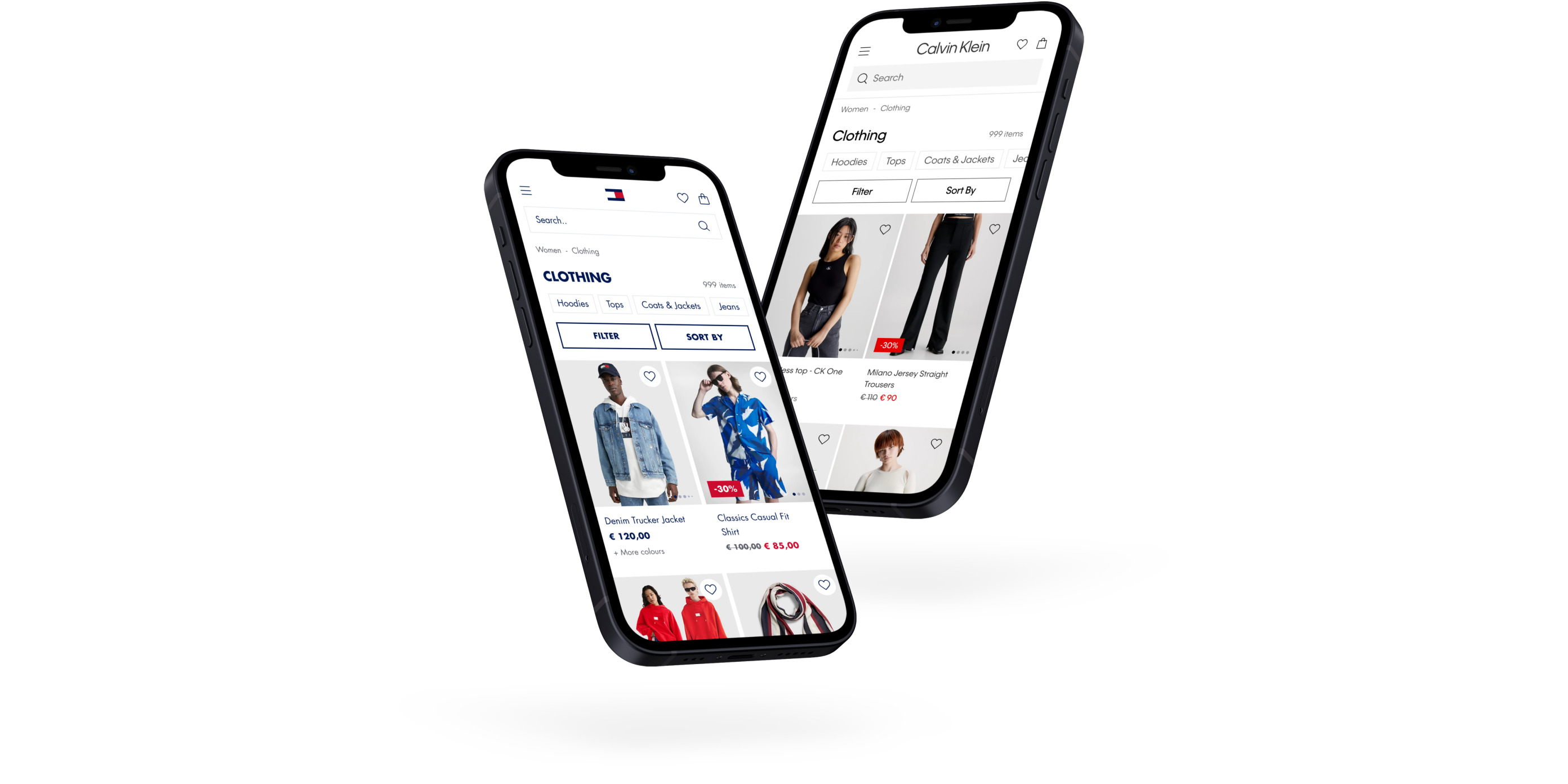
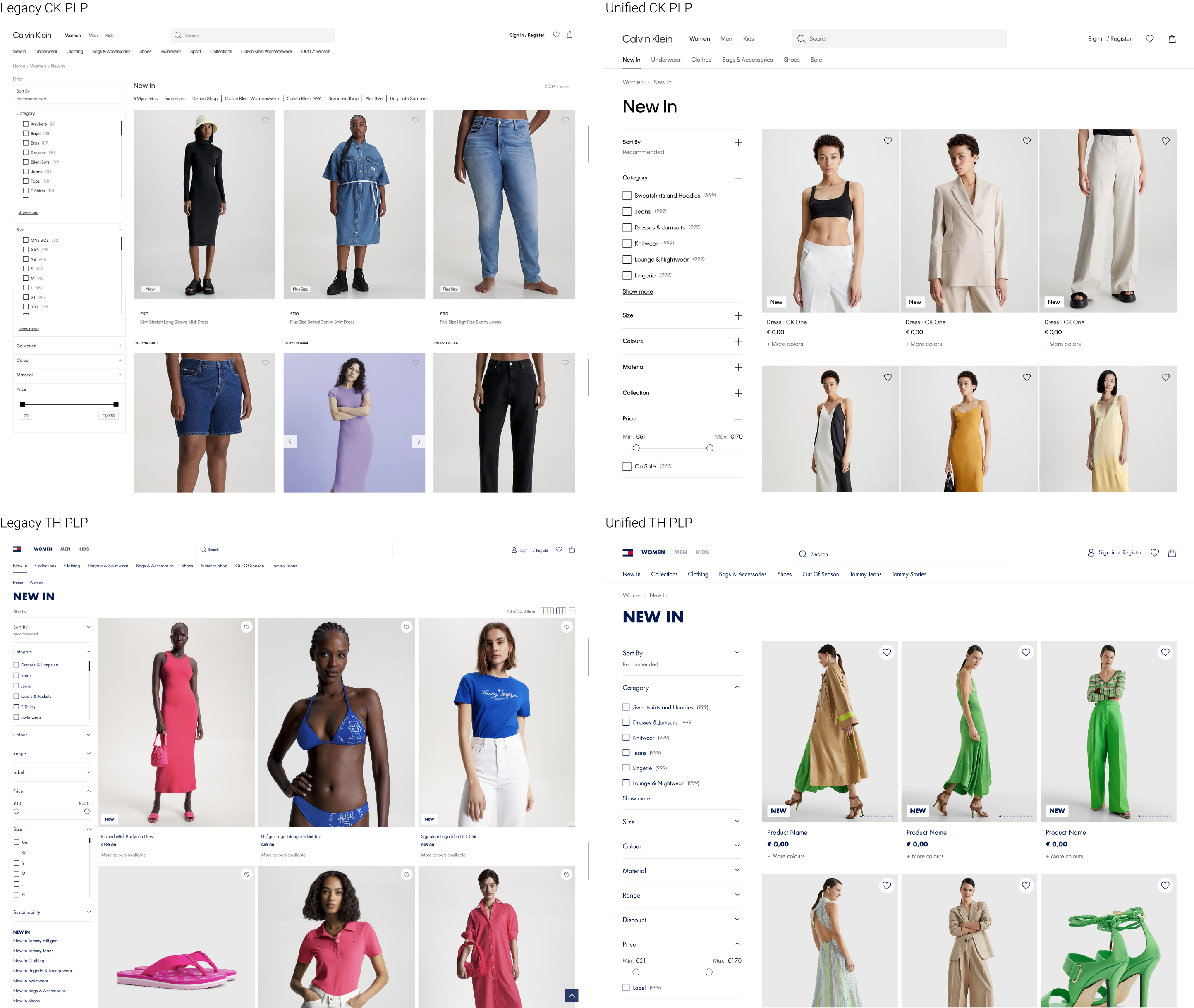
In 2022, PVH began the e-commerce unification project for Calvin Klein (CK) and Tommy Hilfiger (TH) to streamline their operations and optimize resources. The project's objective was to develop two e-commerce platforms using a shared codebase while retaining the individual brand identities of CK and TH.

Two product teams, one from CK and the other from TH, collaborated to unify the Search & Browse experience across both brands, encompassing the internal search, search result pages, and product listing pages.
My Role
  • Enhanced the two product teams' workflow by creating a shared knowledge base at the beginning of the project.
  • Explored, validated, and delivered design details for the internal search, product grid, and page layouts for search results and product listings.
Challenges: When two become one
Each brand had been developing and optimizing their features independently, with little communication between the two teams. Our first challenges were to:
  • Align different approaches and ways of working between the two product teams.
  • Release the MVP within a tight deadline.
  • Tackle the dependencies with multiple stakeholders from both brands to decide which features to include in the first round of release.
Process
Building a shared knowledge base
Two product managers and two designers were the main decision makers to move this project forward.

As everyone had different ideas about how to approach the project, I suggested creating a robust overview of our current situation, to ensure that everyone has a shared knowledge base and stay aligned throughout the process.

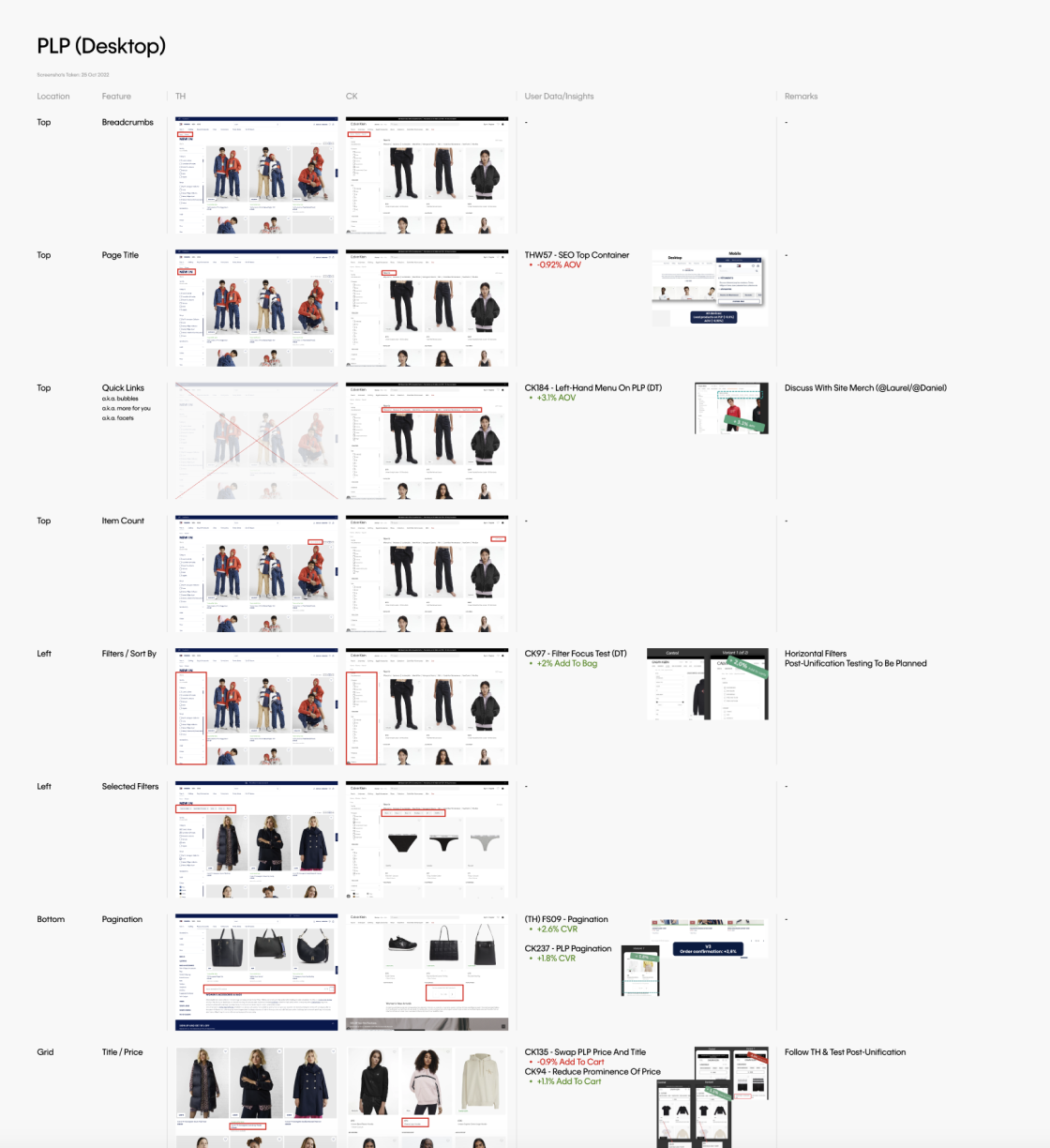
This is how I created the overview board on Figma:
  • Each row on the table represented a single feature, accompanied by screenshots from both brands to highlight differences and similarities.
  • A summary of user data, AB test results, and qualitative user insights were readily available next to each feature.
  • Remarks, decisions, and required actions were documented per feature.
Determining priorities
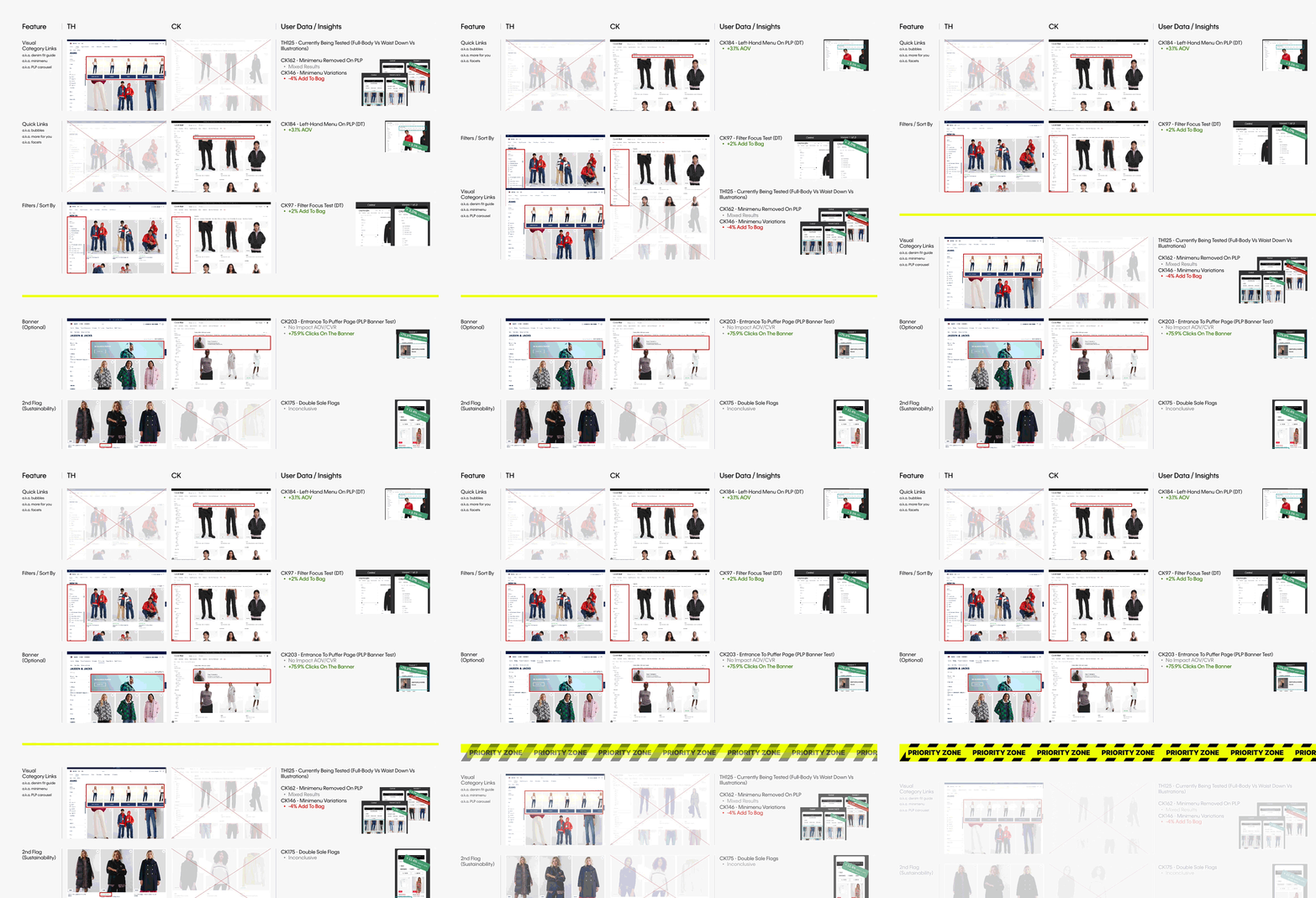
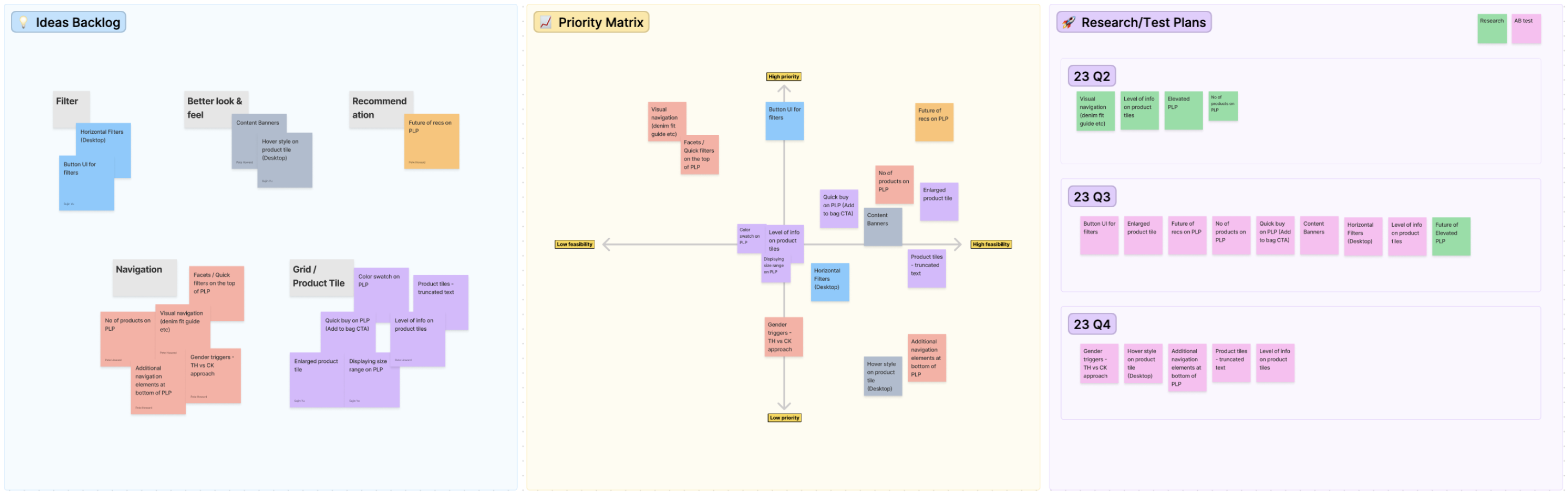
This Figma board served as a solid reference point for the team to discuss priorities and determine the scope of MVP. Based on the user data summary, we decided whether the feature will stay in the Priority Zone, or will be moved down for further validation until the next round of release.

We regularly discussed progress and determined next steps together, which helped our teams stay aligned and move forward efficiently.
Testing and testing
To make informed decisions as we unify the experiences, we conducted nine additional AB tests and evaluated the impact of different experiences.

We were able to identify design choices that have a potential yearly value of €5.6M.
Results
We built the unified MVP in just 4 months with minimal design errors, which was an incredible speed and efficiency compared to other teams who took an average of 10 months.

The collaboration between product managers, designers, and developers was impeccable, resulting in effective prioritisation and execution, close alignment, and seamless delivery.
Designing a consistent experience for both brands
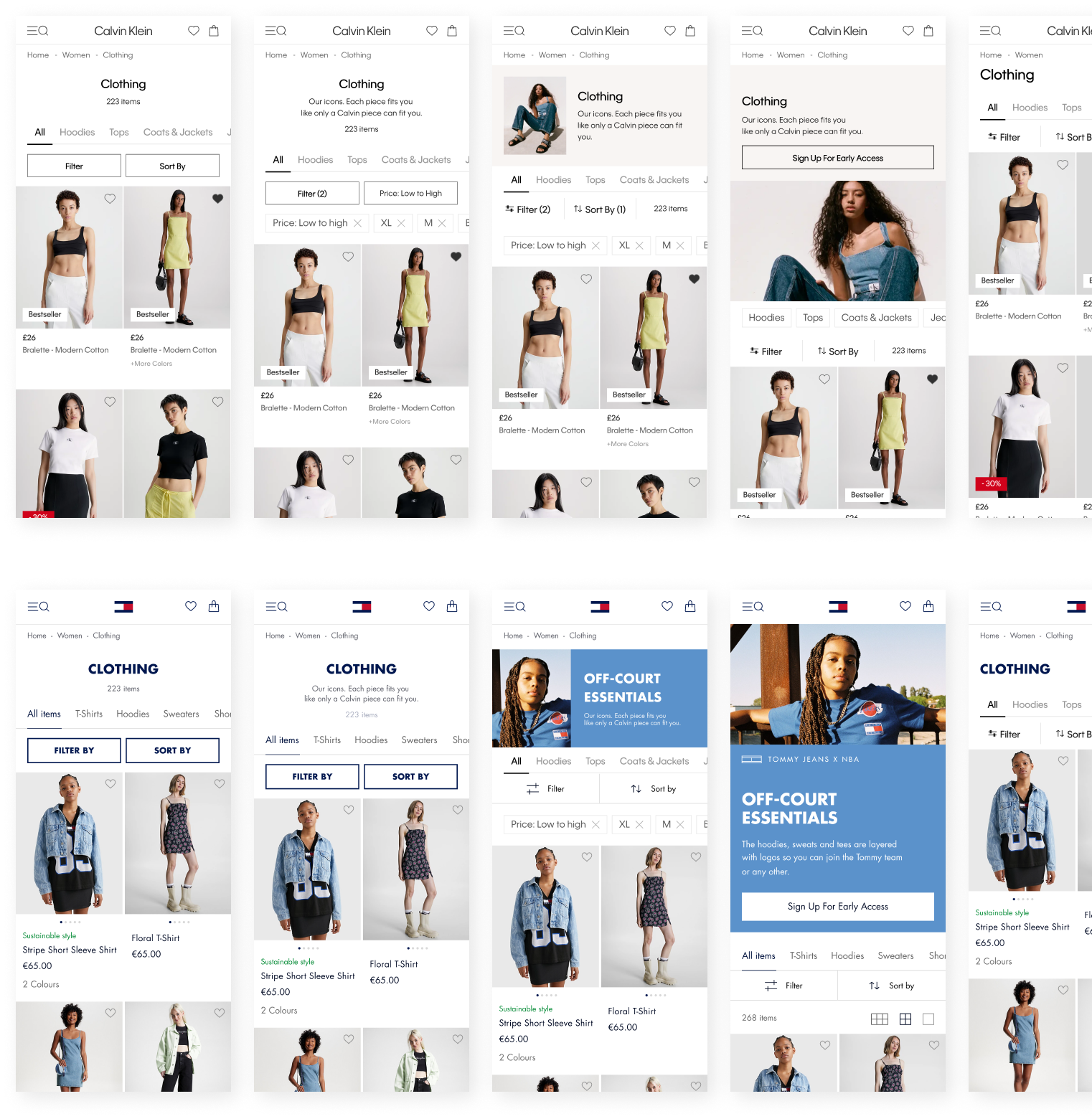
Robust visual design exploration has been done to find design combinations that would work for both brands.

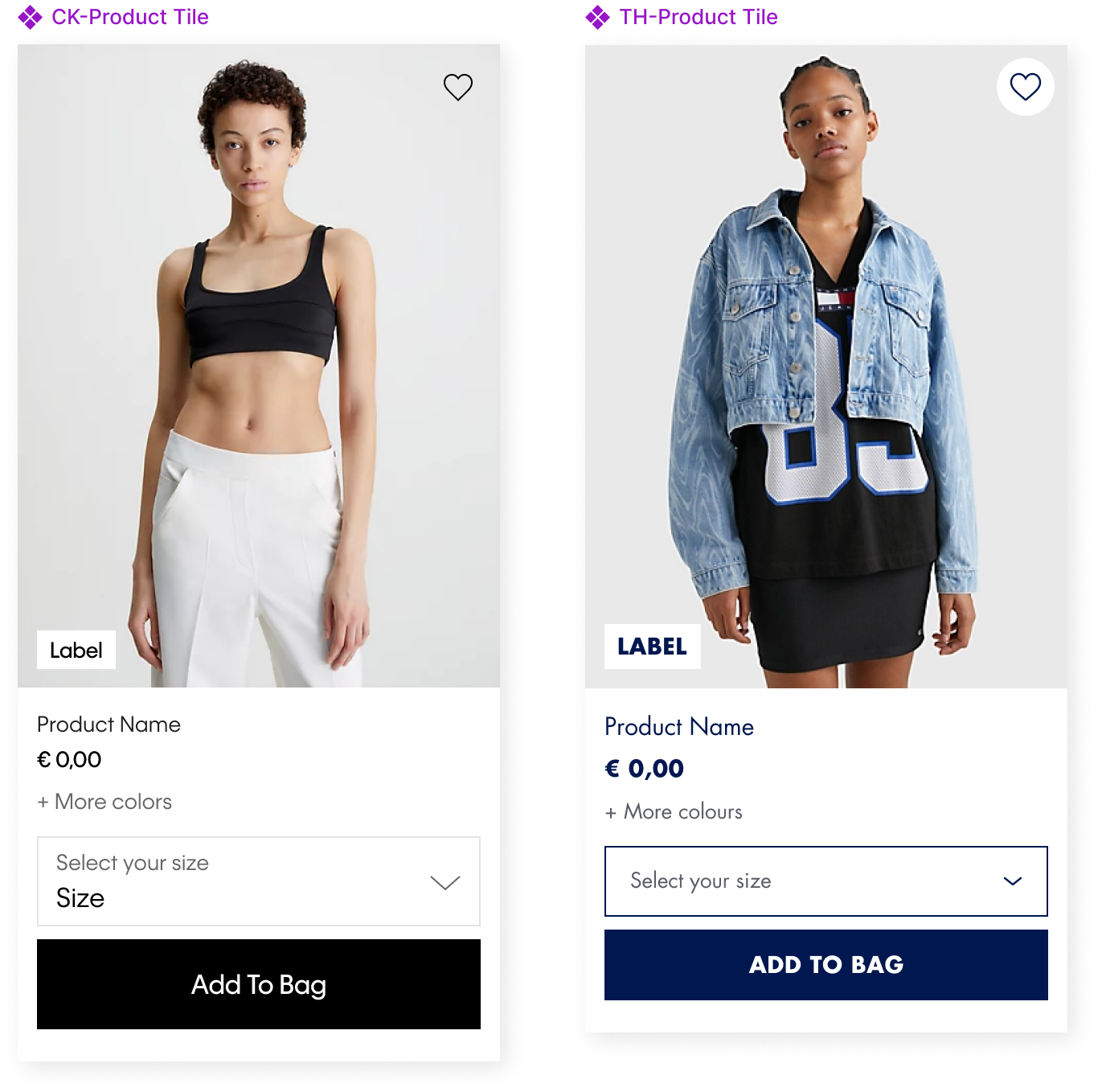
To maximise the benefits of the unifying code bases, we set up shared guidelines such as modularising the components, avoiding overrides, and keeping identical token values between the two brands.
Creating dual-brand design assets
Along with the unification project, I led the renovation of the design system to streamline the dual-brand design experience.

All approved design assets were created for both CK and TH, with matching properties, variants and layer structures.
Further design improvements
During this process, we also re-examined and improved the basic design principles of the page, such as typography and grid system.
Next Steps
Getting ready for the post-unification world
To further optimise the search & browse experience in the unified environment, we continue to find opportunities based on customer surveys and data analysis, and dive into user researches and AB tests for both brands.
Next Project.
Design System →